"I don't like your rule!"
"I am not responsible for your disappointment!"
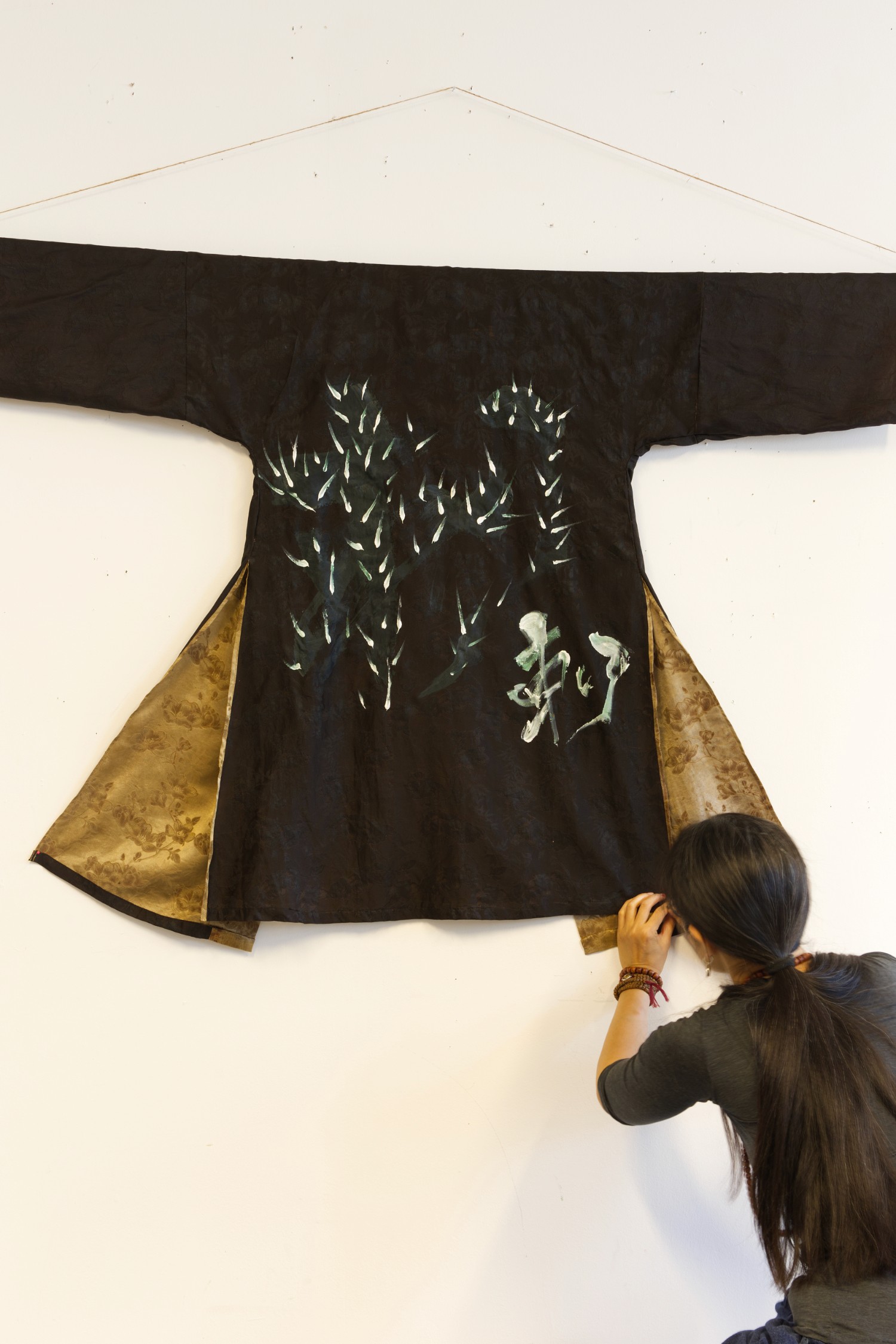
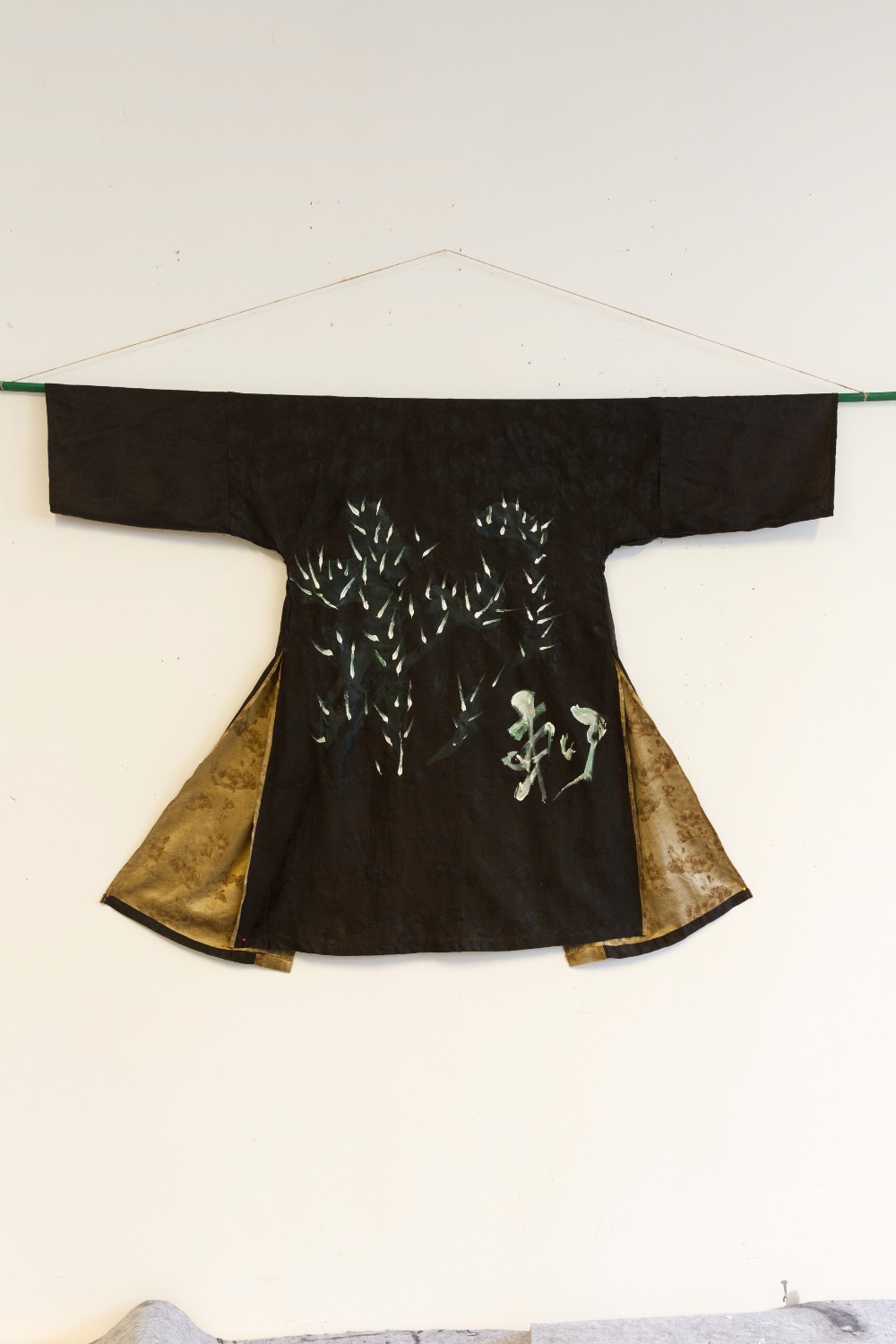
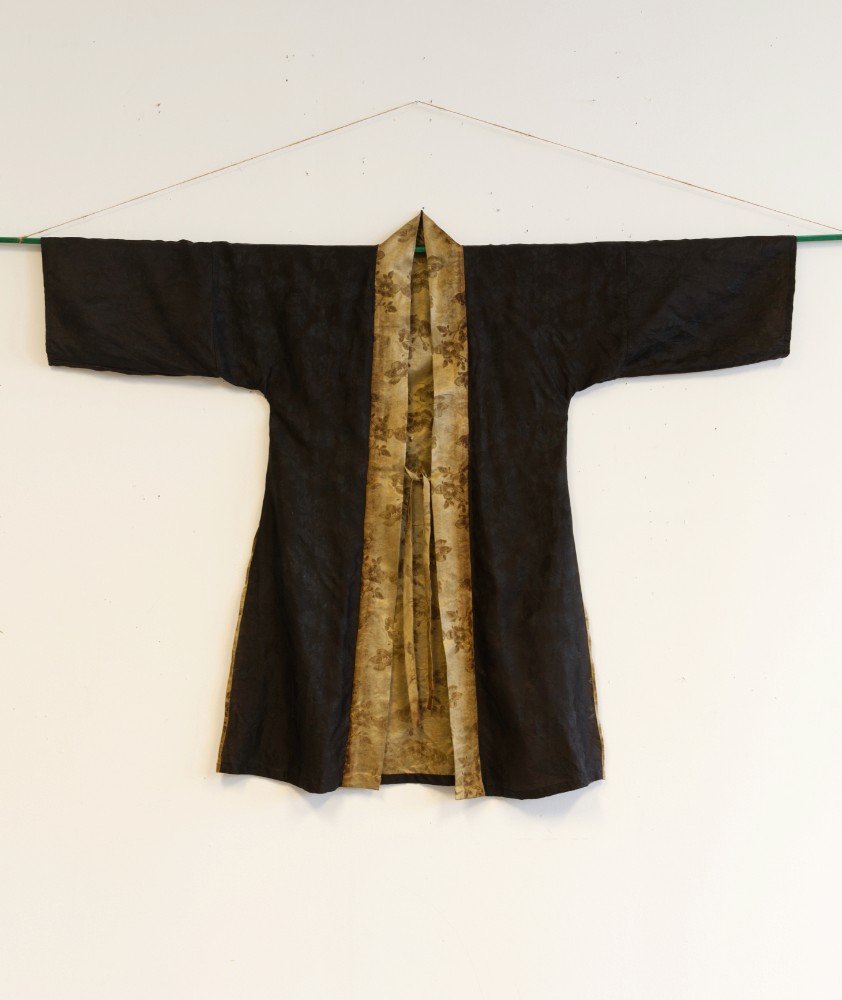
Acrylic on silk Hanfu. Hanfu is also hand made by Camellia(What is Hanfu?)(What is Xiangyunsha?) · 2026
Acrylic on silk Hanfu
刺
I am a feminist, and I am angry.
On this handmade Xiangyunsha Hanfu, I painted the Chinese character 刺—thorn, prick, something that pierces—like a cactus.
It is literal. It is
Women who have a voice, who refuse, who confront, who become angry, are easily labelled as difficult, aggressive, sharp, or “spiky.” I am standing in front of those labels, I can't remove them, I need face them and I face them. If the result of having my own values, defending my boundaries is being framed as spiky, then be it!
Face is, nowadays, there is a strange inequality in how we read anger.
When a man is wrongly judged and becomes angry, people say: What they said about him must be wrong—otherwise, why would he be so angry?
When a woman is wrongly judged and becomes angry, the same anger is often used against her: What they said about her must be true—otherwise, why would she be so angry?
I am angry about this.
And I don't need, and I don't want explaining away that anger, making it softer, more reasonable, more acceptable, I am literally putting it on my clothes.
The clothes matter. I like clothes, I don't deny it. I am a women, I don't deny it.
The work is made on a handmade Hanfu, a contemporary garment connected to the long and changing traditions of Han Chinese dress. Hanfu is not one single historical silhouette; it encompasses many forms of clothing that developed across different periods of Chinese history.
I love wearing Hanfu partly because it does not require my body to be shaped and displayed in the way much contemporary women's clothing does. I want my body breath in the cloth. the cloth gives me a space.
The fabric is Xiangyunsha (香云纱), a traditional silk textile associated particularly with Shunde in Guangdong. Its distinctive dyeing and finishing process uses the juice of the plant Dioscorea cirrhosa (薯莨) together with iron-rich river mud, repeatedly worked, sun-dried, washed, and finished by hand. The traditional Xiangyunsha dyeing technique was included in China's national intangible cultural heritage list in 2008.
I love Xiangyunsha not only because of its history or beauty, but because it doesn't get dirty often, I don't need wash them everyday. I want clothing that gives me time and allows me to live.
So these choices are mine: my favourite way of dressing, my favourite fabric, my body, my handwriting, my anger.
And on it, I write 刺.
(Written by Camellia Xueyi from her human heart.)
"I don't like your rule!"
"I am not responsible for your disappointment!"
Acrylic on silk Hanfu. Hanfu is also hand made by Camellia(What is Hanfu?)(What is Xiangyunsha?) · 2026